Open Tributary. An open white paper on paying open-source creators when the products built on their work earn.
- Role
- Creator · writing, design and engineering
- Platform
- White paper
- Status
- Building
- Stack
- Astro, React, TypeScript, WebGL, Lenis, Vercel Functions, GitHub GraphQL API
Overview
Open Tributary is a white paper on paying open-source creators when the products built on their work earn. It proposes two pieces: the Open Royalty License (ORL), a license the way open source has MIT, and Open Tributary, a protocol that would track what each app is built on and pay every creator in the chain. It’s a proposal preview, open for community feedback.
Why I built it
In the last year and a half I’ve built a stack of my own software. Almost all of it started on someone else’s open-source project. The people who write that code are mostly unpaid or underpaid, and the model breaks once millions of people and AI agents remix it every day. That isn’t a moral footnote. It’s a supply-chain risk. Musicians get paid when a song is played or sampled. Software could work the same way.
What it does
- Free until it earns. Personal use and remixing stay free. A royalty is owed only once the product makes money, sized to what it actually earns.
- Paid automatically. Open Tributary would route royalties to every project in the chain and take a small cut only when creators get paid.
- Credit isn’t billing. Reused, adapted and referenced code are different kinds of credit, and a credit alone doesn’t create a royalty claim.
- The flaws, in public. A full section on where it could break: clean-room rewrites, AI rewrites, royalty stacking, how to weigh a button against a whole system, and new gatekeepers.
How it’s built
An Astro site with React islands. The hero, the river diagram and the chapter after it share one persistent WebGL canvas. Products flow in as lanes, and a keyboard-accessible toggle reverses the current from code to royalties. The canvas pauses offscreen and falls back to static scenes under reduced motion or without WebGL. The royalty loop comes from one list of steps: a diagram on wide screens, an ordered list on narrow ones and for screen readers.
I started with email forms, then moved the conversation to GitHub. A read-only Vercel function pulls the latest Discussions onto the page. The code is MIT; the writing is CC BY 4.0.
Where it is now
Draft v0.1, last updated October 12, 2026. Legal text is in progress, and rates, allocation and enforcement are open questions. Nothing is implemented yet. Anyone can discuss it, challenge a section in an issue, or propose new wording in a pull request.
- 1 / 6
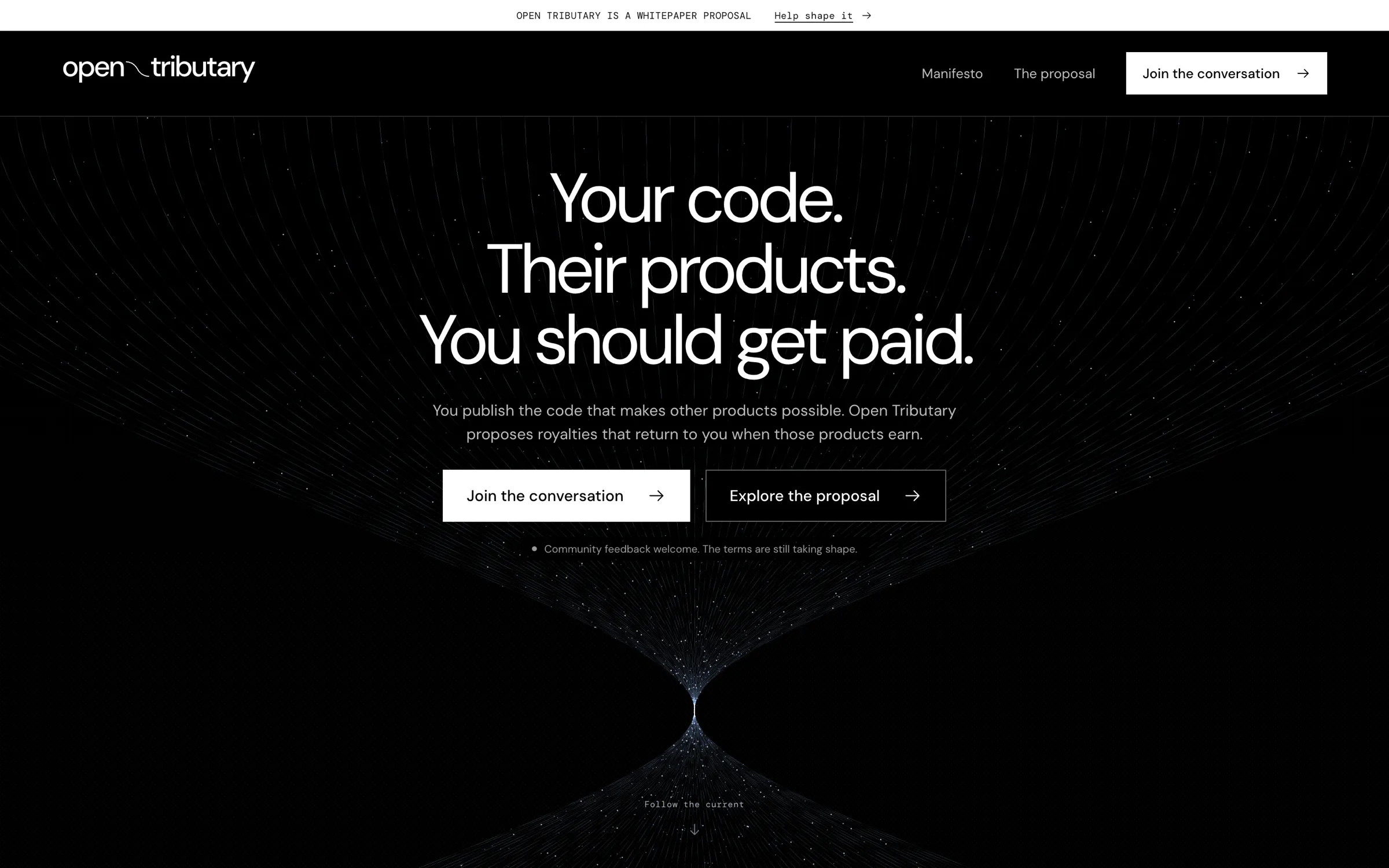
The home page. The river artwork is one WebGL canvas that carries on through the next sections. - 2 / 6
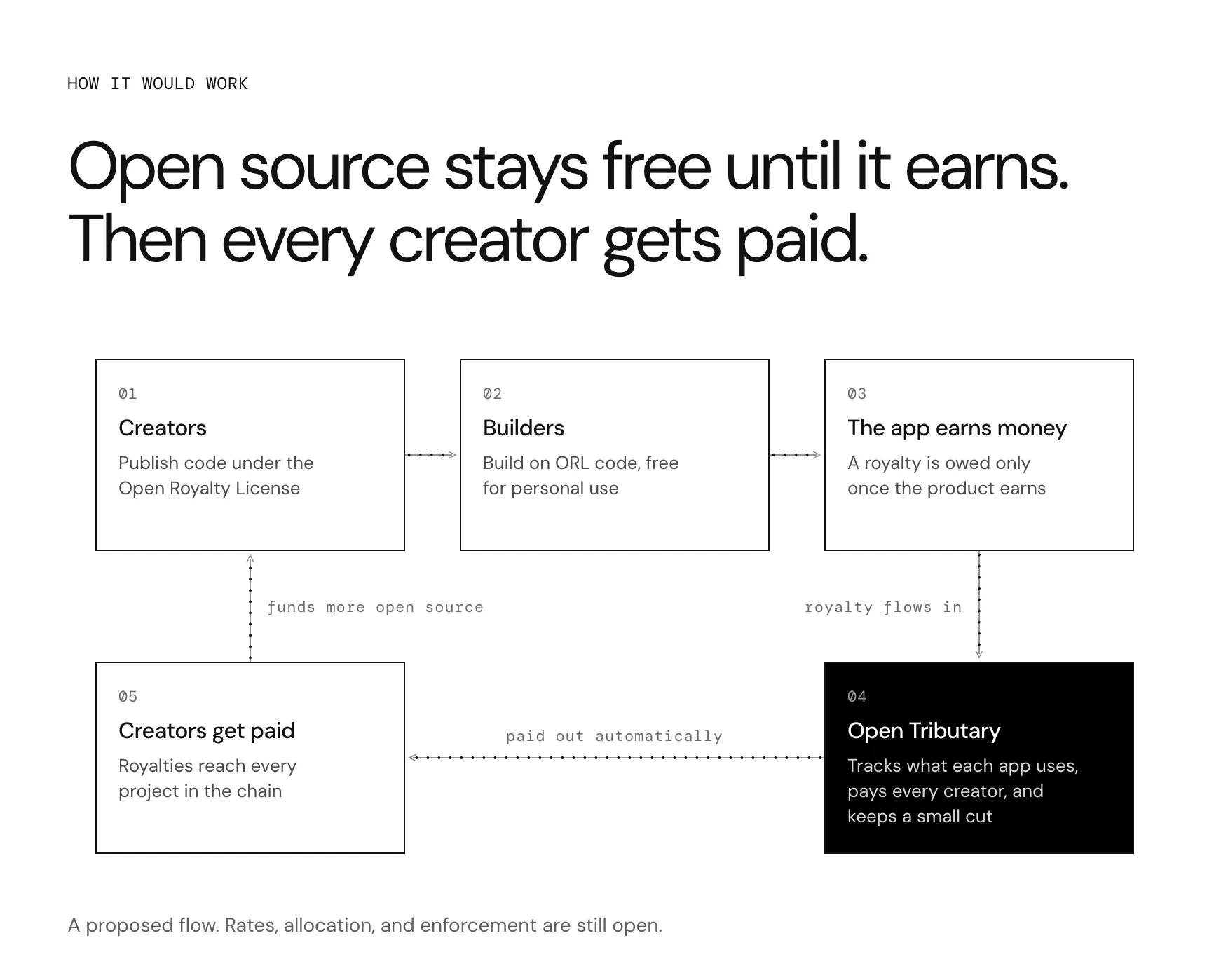
The proposed loop: free to build on, a royalty only once the product earns. - 3 / 6
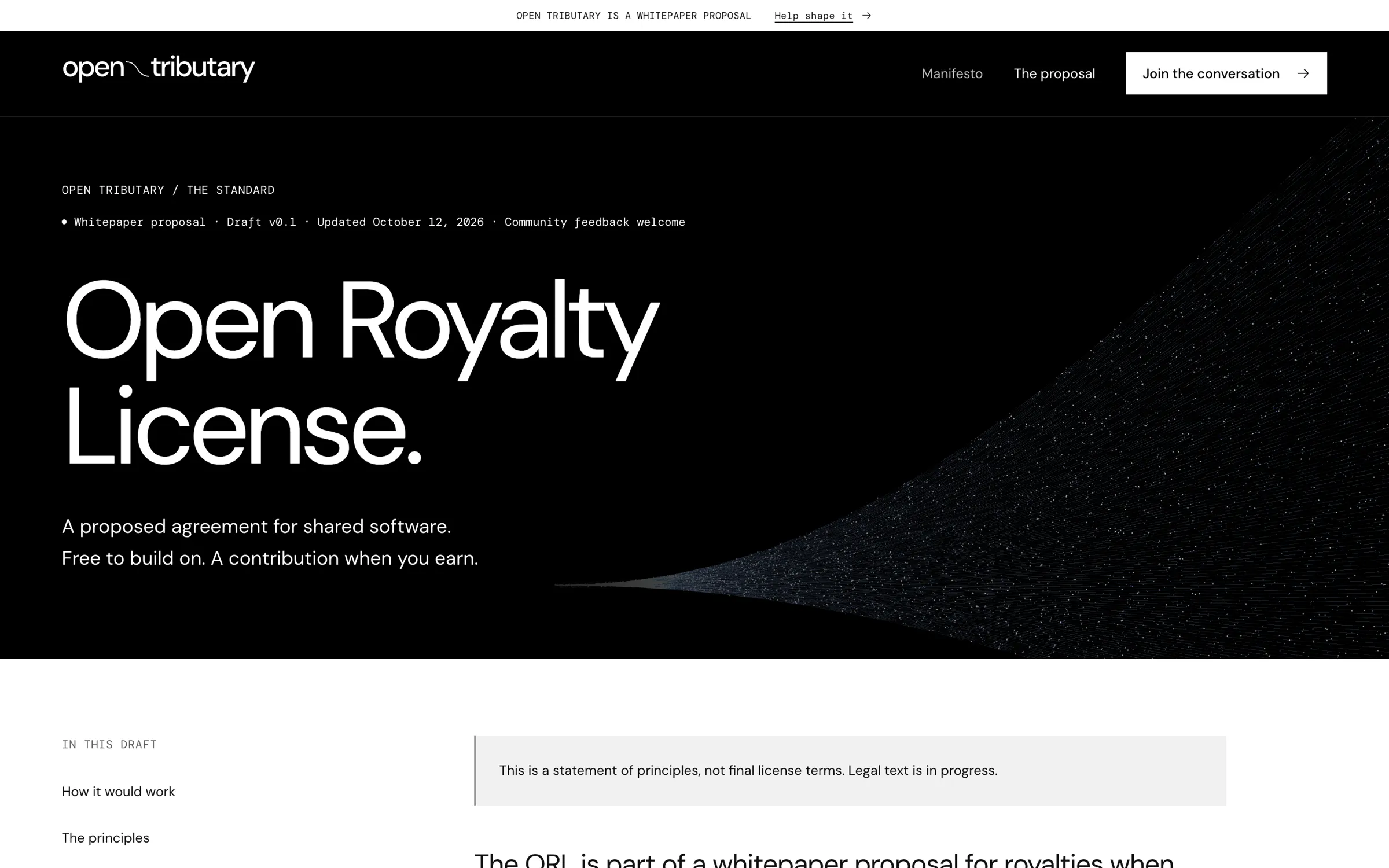
The Open Royalty License, published as draft principles rather than terms. - 4 / 6
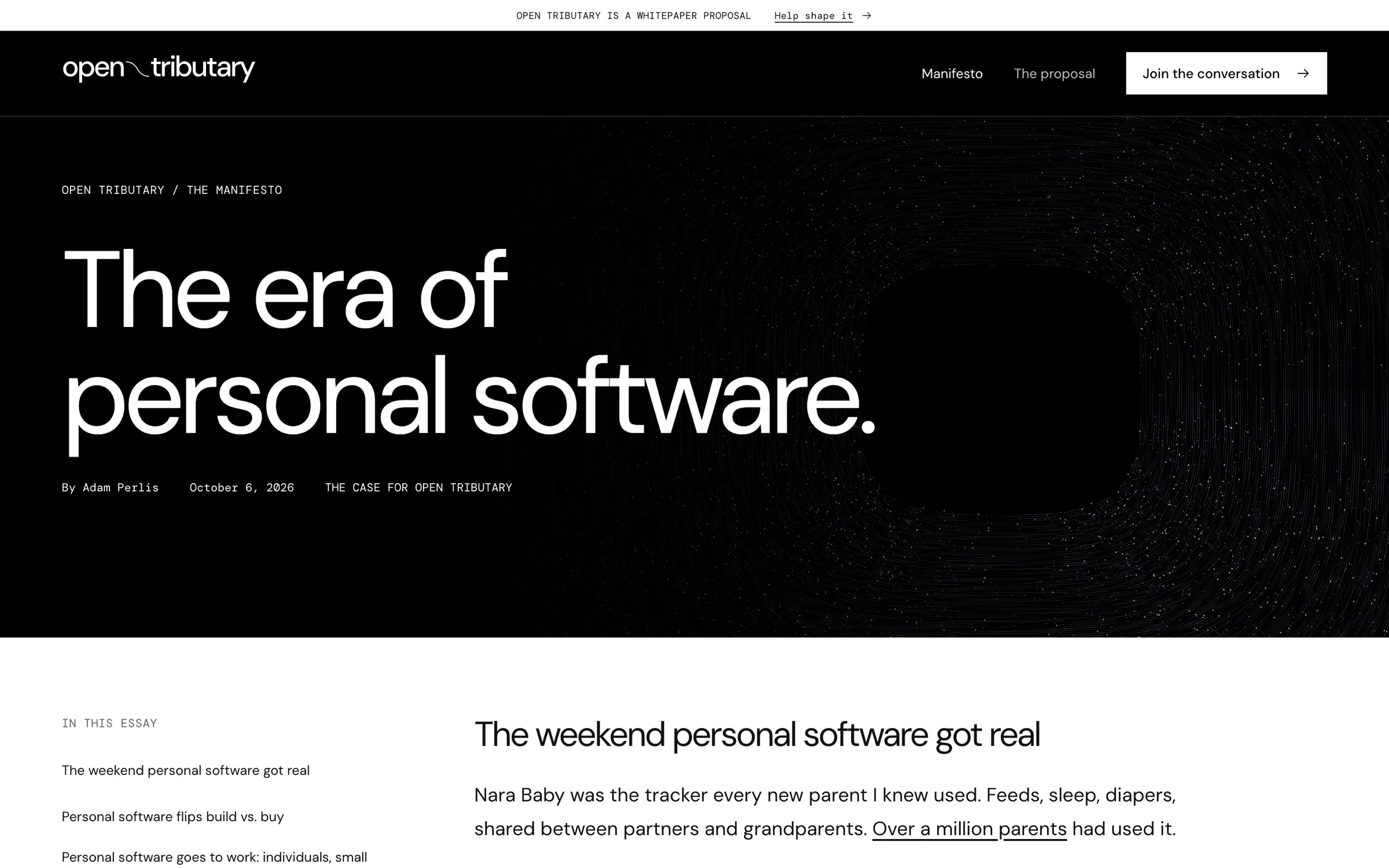
The manifesto that makes the case for it. - 5 / 6
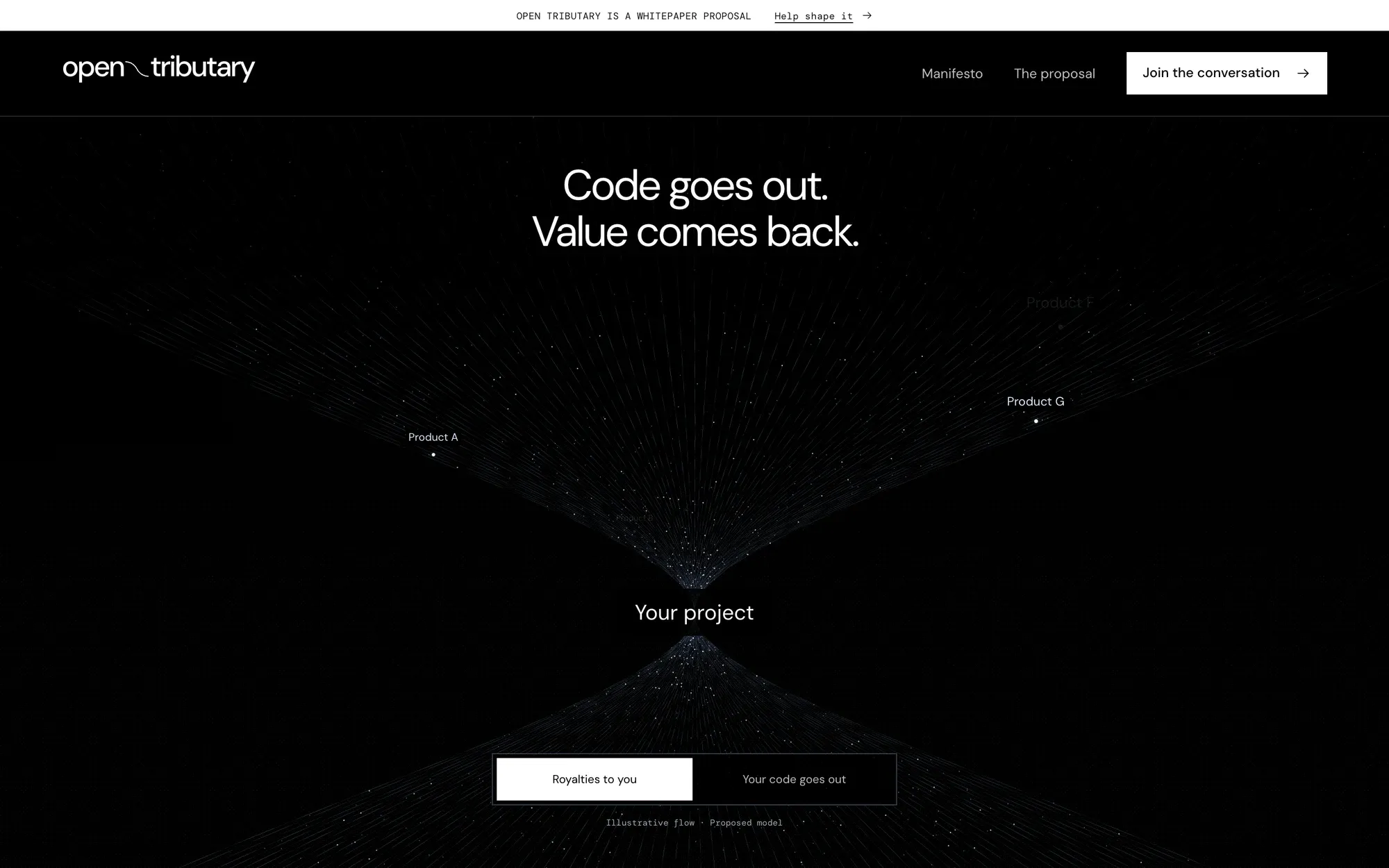
The river diagram: a toggle reverses the current. - 6 / 6
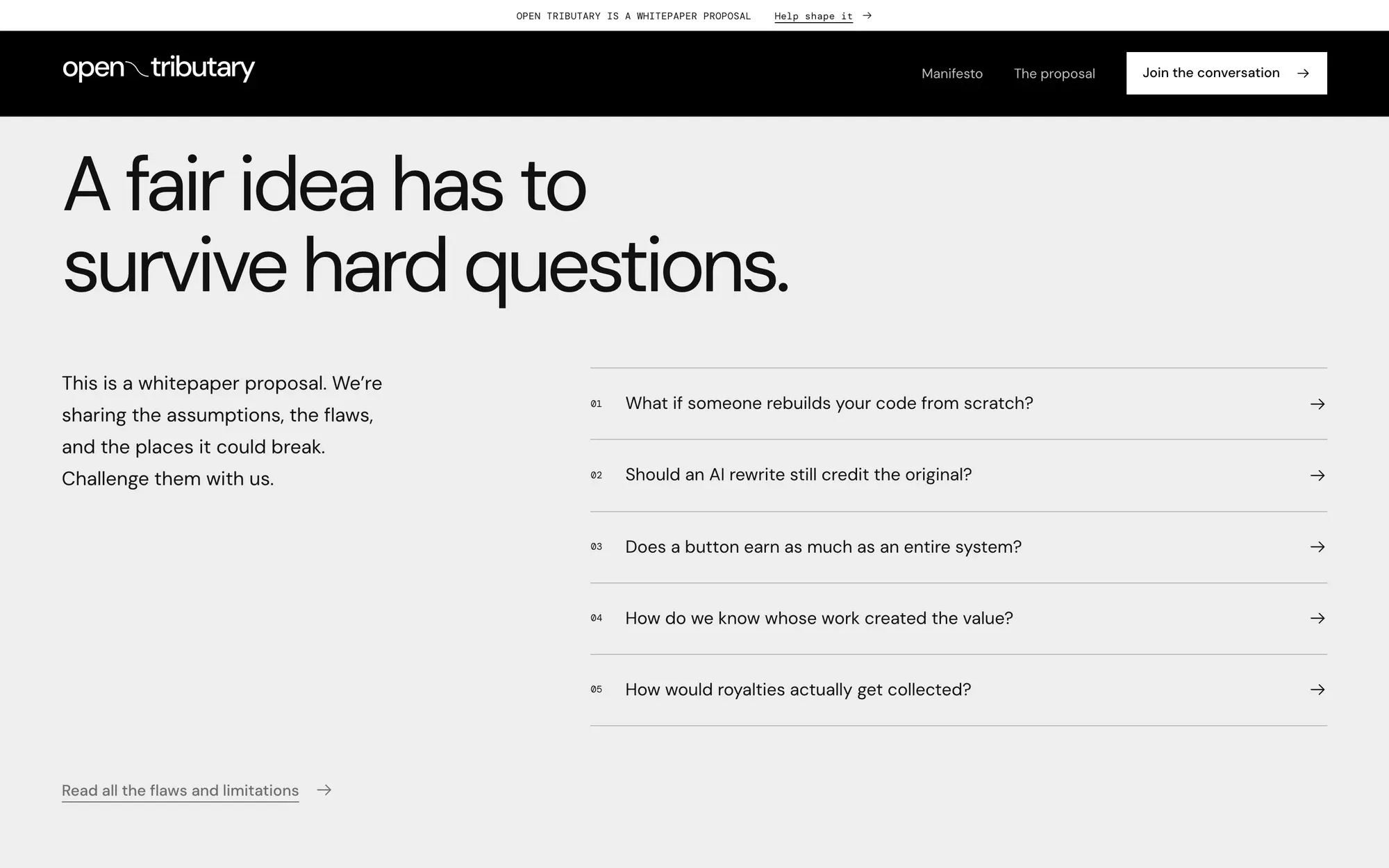
The proposal's hardest questions, answered in the open.